Assess your usage
from your bills

Solar servicing across Durban & KZN
A solar system that isn’t looked after slowly stops paying for itself. Salt air, dust, bird droppings and summer lightning all chip away at output, and most faults go unnoticed until the bill creeps back up. EagleEyeSolutions maintains and repairs residential and commercial solar PV systems across Durban and KwaZulu-Natal: panel cleaning, inverter and battery repairs, fault-finding and scheduled servicing, whether or not we did the original installation, with every repair fully certified.
Solar systems on the KZN coast work harder than most. A fine film of salt settles on the glass within weeks, humidity gets into connectors and isolator boxes, and the summer storm season brings surges that can take out an inverter in a single afternoon. Inland, it’s dust, pollen and overhanging trees. None of it stops a system outright; it just quietly lowers what you get back from it, month after month, year after year.
Our solar system maintenance covers every part of a PV installation, not just the panels. We clean and inspect the array, test each string, check the inverter’s logs and settings, look over battery health, and inspect isolators, breakers, surge protection and roof fixings. You get a written report on what we found, what we fixed and what to watch, for residential solar and commercial solar systems across Durban & KZN.
from your bills
right kW, no waste
CoC and SSEG handled
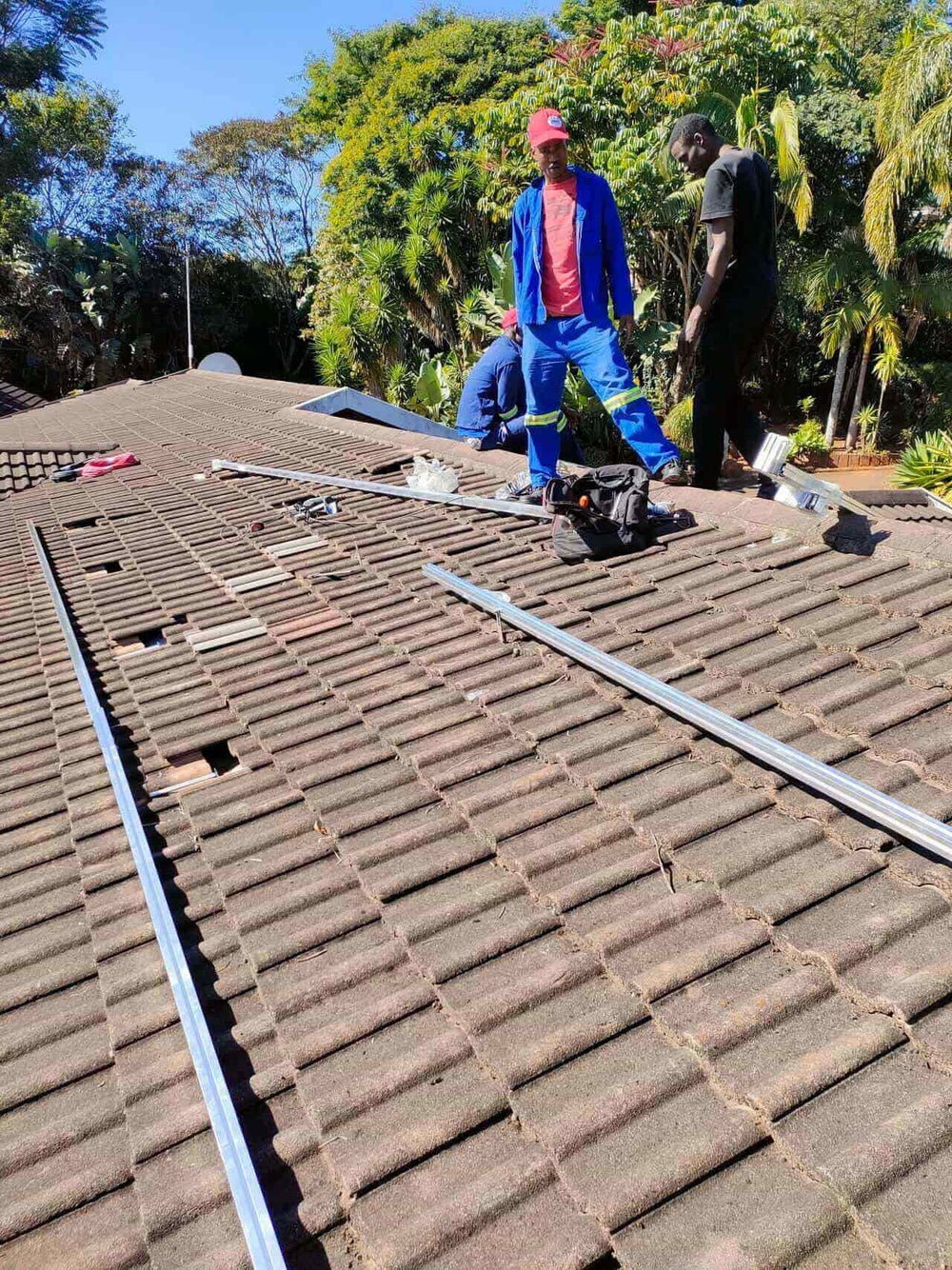
Homes across Kloof, Hillcrest, Umhlanga and Ballito, serviced once or twice a year depending on distance from the sea.
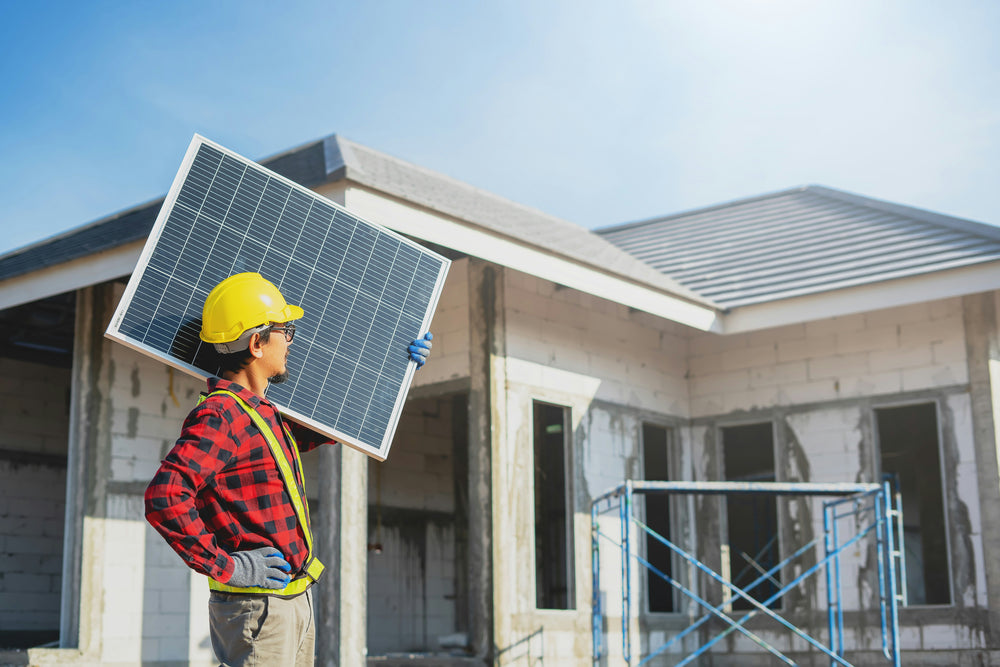
Cracked or hail-damaged modules, burnt connectors and failed strings, replaced with parts matched to your array.
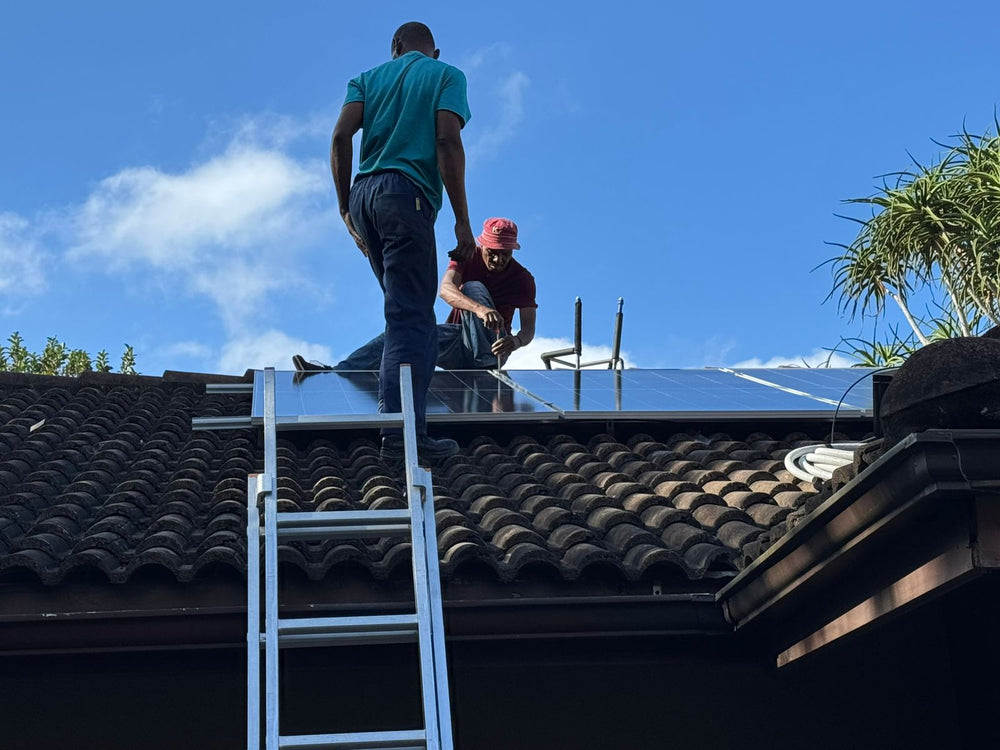
Salt, dust and bird droppings removed with soft brushes and purified water, so the glass and its coating aren't damaged.
The right interval depends mostly on where the system is and how hard it works.
Inland & suburban homes
Every 12 months
Annual inspection, clean as needed
Coastal homes (within a few km of the sea)
Every 6 months
Salt film removal and corrosion checks
Commercial & industrial sites
Every 3 to 6 months
Scheduled visits plus remote monitoring
Those intervals are a starting point, not a rule. A home in Umhlanga or on the Bluff picks up salt far faster than one in Pinetown, and panels under trees or near a busy road need cleaning more often than a clear north-facing roof. Low-pitch and flat-mounted arrays don't self-clean in the rain the way steeper roofs do. The most reliable trigger is your own data: if your monitoring app shows output dropping on clear days compared with the same month last year, it's time for a check. Systems with batteries also benefit from an annual look at firmware, charge settings and battery health, because a small settings issue can shorten battery life long before it shows up as a fault.
Not sure when your system was last serviced? We'll check it and tell you.
Book a system health check
Dirty panels are the most common reason a solar system loses output, and the cheapest one to fix. Dust and salt spread a thin film across the glass, while bird droppings and leaves block individual cells, which drags down the output of the whole string and can create hot spots that damage the panel over time. Our solar panel cleaning service uses soft brushes and purified, deionised water that dries without leaving any mineral spots, and we clean early in the morning or late in the afternoon, so cold water never hits hot glass and cracks, stresses or damages the panel surface.
If you’d rather clean your own panels, keep it gentle: a soft brush or sponge, clean water and a squeegee, with no pressure washers, scourers, vinegar or household detergents, which can strip the anti-reflective coating and void the panel warranty. Switch the system off first, and never walk on panels. For anything on a second storey or a steep tiled roof, the safer and usually cheaper option is to let a crew with the right access equipment do it. Every clean we do includes a full visual inspection of the array, so small problems are caught and fixed early, while our team is already on site.
| Symptom | Likely cause | What we check | Typical fix | Urgency |
|---|---|---|---|---|
| Inverter error or fault code | Earth fault, grid voltage issue or overheating | Fault log, DC insulation, grid, ventilation | Repair wiring, correct settings, update firmware | High |
| Output lower than usual | Dirty panels, new shading or a failed string | Monitoring history and string readings | Clean, re-terminate or replace a panel | Medium |
| System producing nothing | Tripped breaker, blown fuse or failed inverter | DB board, isolators, fuses, surge devices | Replace protection or repair the inverter | High |
| Battery not charging properly | BMS comms, wrong settings or ageing cells | BMS logs, comms cable, charge settings | Reconfigure, update firmware or claim warranty | High |
| Roof leak near the panels | Lifted flashing, cracked tiles or old sealant | Roof hooks, flashing and tiles | Reseal, replace tiles or re-flash mounts | Medium |
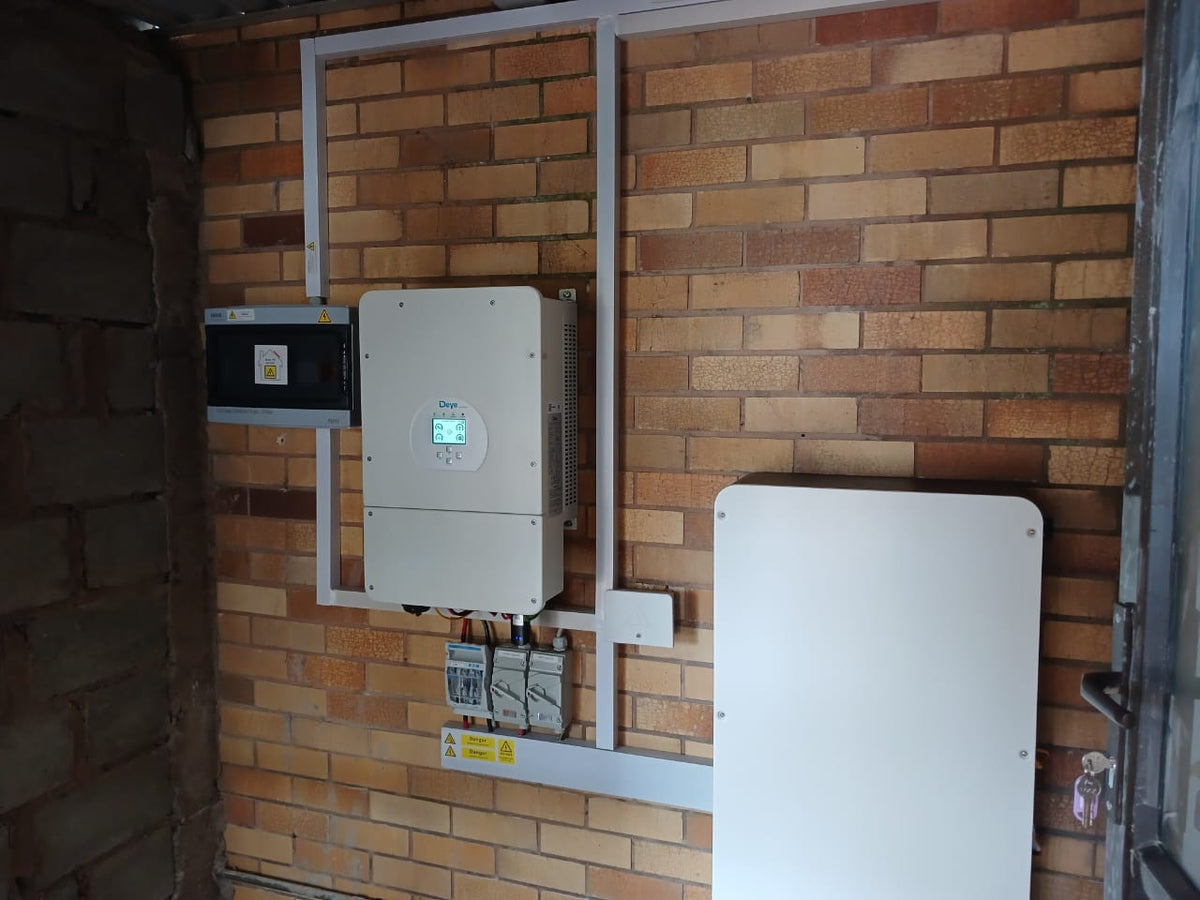
The inverter is the hardest-working part of a solar system and the component most likely to need attention. Many inverter faults can be repaired rather than replaced: an isolation fault is usually a damaged cable or a wet connector on the roof, and grid or overload errors are often settings, not hardware. Where a unit has failed, we check whether it’s still under the manufacturer’s warranty and handle the claim, or fit a compatible replacement set up to work with your existing solar panels and batteries.
Modern lithium (LiFePO4) batteries need little hands-on care, but they do need the right conditions. As part of solar battery maintenance, we check that the BMS is communicating with the inverter, that charge and depth-of-discharge settings suit the battery, that firmware is current and that the battery has enough ventilation to stay cool. Getting these right protects the battery’s lifespan and keeps its warranty valid.
Every part of your PV system, checked and serviced
A solar system is only as reliable as its weakest component, so a full service looks at every part of it, from the glass on the roof to the protection devices in your DB board. We clean and inspect the panels, test each string, review the inverter’s fault log and settings, check battery health and BMS communication, and examine cabling, connectors, mounting rails and roof seals. Anything that needs attention is noted in your report with a fixed price, so you can decide before any further work begins.
Cleaning, cracks, delamination, hot spots and frame corrosion.
Fault logs, settings, firmware, cooling and string performance.
BMS comms, charge settings, health readings and ventilation.
Isolators, breakers, DC fuses and surge arrestors for storm season.
MC4 connectors, cable runs, glands and UV or rodent damage.
Rails, clamps, roof hooks, flashing and waterproofing.
Data loggers, app connection and output against expected yield.
Tell us what your system is doing and we'll diagnose it on site.
Every service and repair follows the same four steps, whether it’s a 5kW home system or a commercial rooftop. Where your system has online monitoring, we start by reviewing its data remotely, which often tells us what’s wrong before we arrive so the technician brings the right parts. On site, we inspect and test the full system, then clean, repair or replace what’s needed. All electrical work is done by qualified technicians and certified with a Certificate of Compliance, and you receive a written report on the system’s condition, the work done and the next service date.
monitoring data and fault history
panels, inverter, battery and DB
faults fixed, parts replaced
CoC issued where required
Most solar panels should be cleaned once or twice a year. Homes near the coast should have them cleaned every six months, and panels under trees, near busy roads or on flat mounts may need it every three to six months. In Durban and coastal KZN, salt spray builds a film on the glass faster than inland dust does. The clearest sign that cleaning is due is lower output on clear days than in the same month last year.
The cost of solar panel maintenance depends on the size of the system, how easy the roof is to reach and whether batteries are included. Cleaning is usually priced per panel, a full service is priced per system, and repairs are quoted separately once the fault has been found. A routine service costs far less than the output a neglected system loses or a failed inverter would cost to replace. EagleEyeSolutions gives a fixed price before any work begins.
Yes, many solar inverter faults can be repaired without replacing the unit. Common errors such as isolation (earth) faults are usually caused by a damaged cable or a wet connector on the roof. Grid voltage and overload errors are often fixed by correcting settings or updating firmware. If the inverter itself has failed, a technician can check whether it’s still under the manufacturer’s warranty and handle the claim, or fit a compatible replacement.
Yes. EagleEyeSolutions repairs and maintains residential and commercial solar systems across Durban and KwaZulu-Natal, whoever installed them. We work on all major inverter and battery brands, and can take over servicing if your original installer is no longer trading or available. Every repair starts with a full diagnostic check, so we understand the existing system before any work is done.
The main signs of a faulty solar system are inverter error codes, lower output than usual on sunny days, and a battery that drains faster than before. Other signs are a monitoring app that has gone offline and a rising electricity bill with no change in usage. Visible damage such as cracked panels, burn marks or melted connectors needs urgent attention. Switch the system off at the isolators and call a qualified solar technician.
Yes, but modern lithium (LiFePO4) solar batteries need very little hands-on maintenance. They need an annual check that the battery management system (BMS) is communicating with the inverter, that charge and depth-of-discharge settings are correct, that firmware is up to date and that the battery has enough ventilation to stay cool. Getting these right protects both the battery’s lifespan and its warranty. Older lead-acid batteries need more frequent checks.
Solar panels typically last 25 to 30 years, and most quality panels come with a 25-year performance warranty. Output declines gradually over that time rather than stopping suddenly. Inverters usually need replacing sooner, commonly after 10 to 15 years, and lithium batteries often last around 10 years. Regular cleaning and servicing helps every component reach its full lifespan, especially in Durban’s humid, salty coastal climate.
You can check your solar panel output on your inverter’s display or its monitoring app, which shows daily and monthly generation in kWh. Compare production on clear, sunny days with the same period in previous months or the previous year. A small seasonal change is normal. A steady drop that cleaning doesn’t fix usually points to a fault, such as a failed string, a loose connector or an inverter issue, that a technician should inspect.