An itemised quote
Brands, model numbers, panel count and usable battery capacity, all listed with VAT shown.

Durban solar installers
Panels, hybrid inverters and lithium batteries, sized from your electricity bill and installed by a local team based in Kloof. We handle the free site consultation, system design and installation, so you get lower bills and power that stays on when the grid doesn’t.
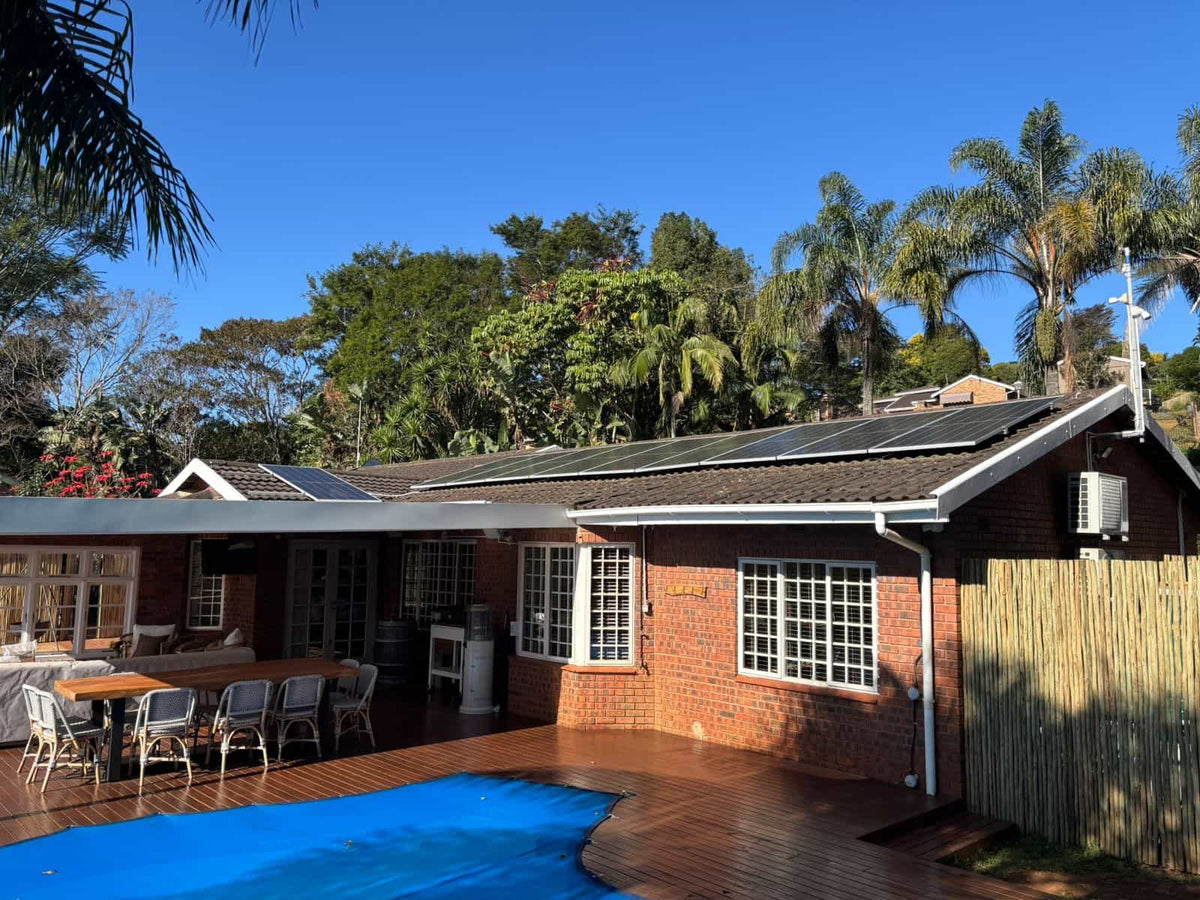
Local team, based in Kloof
EagleEyeSolutions is a Durban solar installation company based in Kloof. We design and install solar panels, hybrid inverters and lithium batteries for homes and businesses across Durban, Umhlanga, Ballito, Westville, Hillcrest, Kloof and the wider KwaZulu-Natal region, backed by more than 30 years of technical experience, with the CoC and grid registration advise provided.
Most of our work is for homeowners and small and mid-sized businesses across Durban who want lower electricity bills and power that stays on when the grid doesn’t. The same team also installs CCTV, intercoms, alarms and fire detection, so if you are planning solar and security at the same property, it can all be designed and wired once rather than twice.
Why are so many Durban households and businesses going solar? Electricity tariffs have risen well ahead of inflation for several years running, and most people still remember the evenings of Stage 6. A properly sized system tackles both: it cuts what you buy from the grid every month, and it keeps the fridge, lights and Wi-Fi running when the power goes.
Brands, model numbers, panel count and usable battery capacity, all listed with VAT shown.
Separate terms for panels, inverter, battery and workmanship, in writing before you pay.
References or photos of systems fitted near you, plus genuine reviews from real customers.
Every EagleEyeSolutions system is sized from your electricity bills and built with Tier 1 products only.
| System | Typical use | Load shedding protection | Relative cost |
|---|---|---|---|
| Grid-tied | Cutting daytime bills where outages are not a concern | None. The inverter shuts down when the grid fails, by design | Lowest |
| Hybrid | Most Durban homes and businesses: lower bills plus backup | Yes. Battery and panels keep chosen circuits, or the whole house, running | Mid |
| Off-grid | Farms, remote properties or sites with no reliable grid connection | Full independence, sized for several cloudy days in a row | Highest |
Please treat these as guide prices rather than a quote: your final cost can vary depending on your roof type and condition, cable distances, your distribution board, how much battery storage you need and current equipment prices. We confirm everything after a free site inspection, so there are no surprises.
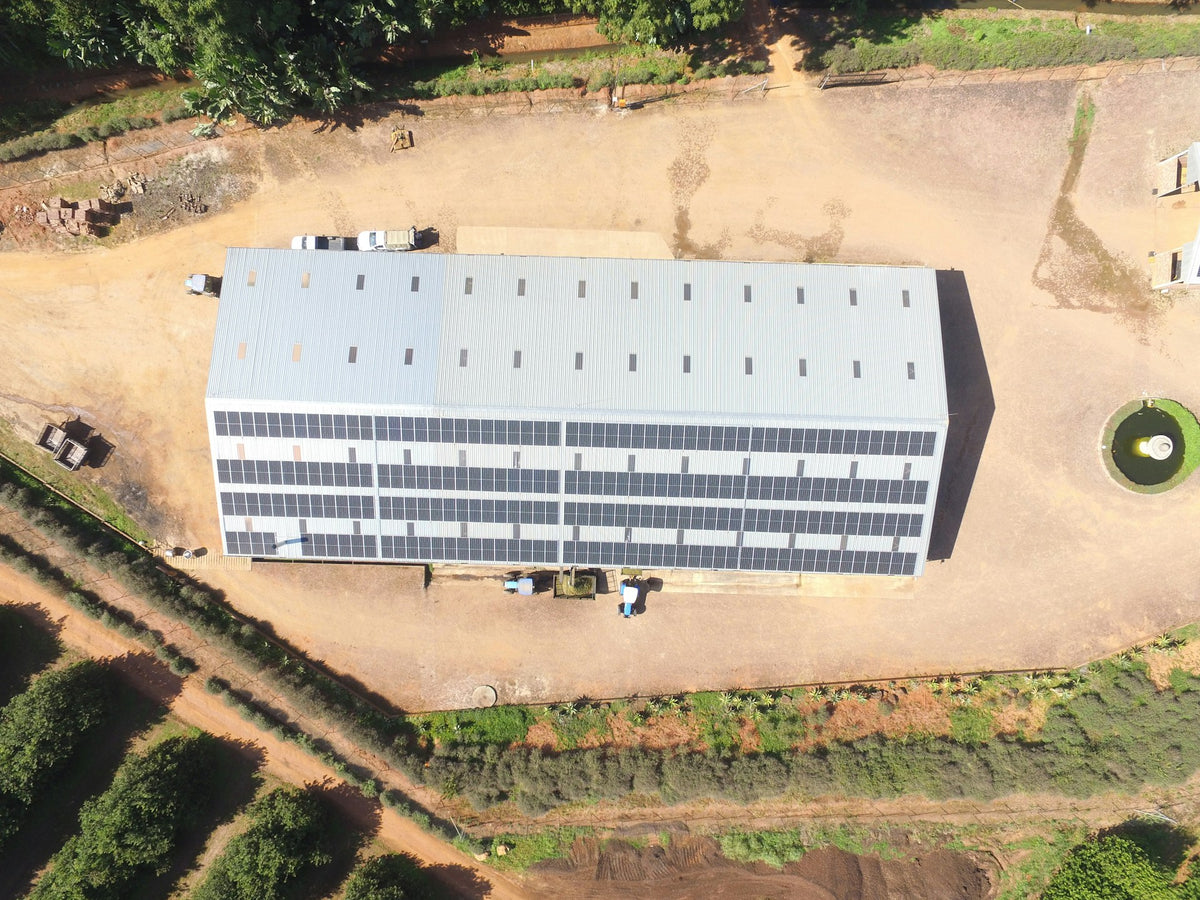
Yes. The KZN coast gets strong sunshine all year, and while summer brings more cloud and afternoon storms than inland areas, a well-designed system still pays its way. North-facing roofs perform best, but east and west-facing roofs work well too. Heat trims output on the hottest days, so we leave a ventilation gap under every panel.
Salt air is the bigger issue. Near the sea, in Umhlanga, the Bluff and Ballito, we use anodised aluminium rails, stainless steel fasteners and panels tested for salt mist, with inverters and batteries kept under cover. Further inland, in Kloof and Hillcrest, summer lightning matters more, so surge protection on every system is standard.
Start with the kWh figure on your last few electricity bills, not the rand amount, as tariffs change but your usage pattern doesn’t. Then decide which appliances must keep running during an outage and for how long. As a rough guide, each kilowatt of panels on the KZN coast produces around 4 kWh a day averaged over the year.
Wants the fridge, lights, Wi-Fi and TV during outages. The 5 kW package, with 4.7 kW of panels and a 5.3 kWh battery, covers most daytime use and recharges the battery on a normal day.
Wants lights, fridges, Wi-Fi and a home office running in outages. The 10 kW package, with 5.9 kW of panels and 10.6 kWh of storage, covers daytime use and the evening essentials.
Pool pump, two people working from home, wants almost the whole house backed up. The 16 kW package, with 9.4 kW of panels and 20 kWh of storage, is the better match.
For nearly every home and business, a hybrid inverter with lithium battery storage is the right choice. We install Deye hybrid inverters with Deye, Dyness and Hina batteries.
Sits between your panels, battery and the grid. It uses solar first, the battery second and the grid only to top up, then switches your backed-up circuits over to battery in an outage.
Lower bills plus backup when the power goes.
Has no grid supply to fall back on, so the panels and battery must carry everything, sometimes with a generator as a last resort. It needs more panels and storage, so it costs the most.
Farms and remote sites far from the grid.
Stores solar for the evening and for outages. Lithium lets you use around 90% of its capacity, lasts thousands of charge cycles and usually comes with a 10-year manufacturer warranty.
Lights, fridge and Wi-Fi through outages.
We provide reliable solar solutions across Durban and the surrounding KwaZulu-Natal communities.
Hillcrest, Kloof, Waterfall
Durban North, Umhlanga, La Lucia
Bereа, Glenwood, Bluff
Not sure if we cover your area? Get in touch and we’ll be happy to help.

Not everyone needs a full installation. Electricians, returning customers and anyone with their own installer can buy batteries and solar panels directly from our online store.
Panels in KZN get dirty faster than you might expect, from coastal salt, dust, pollen and birds. We recommend a clean every six months near the coast and once a year inland.
Yes, in most cases. As long as you stay connected to the grid, you will still pay the fixed and network charges on your account, whether you are billed by eThekwini or directly by Eskom. Grid-tied and hybrid systems also draw some power from the grid at night and on cloudy days, so your bill drops but rarely disappears. Only a fully off-grid system removes it completely, and that costs considerably more to build.
If your system connects to the grid, yes, even a hybrid that never feeds power back. Most homes here register with eThekwini Electricity as a small-scale embedded generation (SSEG) system; if Eskom supplies you directly, you register with Eskom. Off-grid systems still need a Certificate of Compliance.
Our complete packages start at R85,800 excluding VAT for a 5 kW system, with the 10 kW package at R114,800 and the 16 kW package at R179,800. Each includes panels, a Deye hybrid inverter, lithium batteries, labour and a CoC on new work. These are guide prices: your final cost depends on your roof, cable runs, distribution board and storage needs, and is confirmed after a free site inspection.
For most family homes, yes. Our 10 kW package pairs a 10 kW Deye hybrid inverter with ten 590 W panels and 10.6 kWh of lithium storage, which suits households using around 700 kWh a month. It can run most of the house during an outage. Homes with very high usage, such as pool pumps, several air conditioners or electric cooking, are usually better matched to our 16 kW package.
In most cases, panels come first. Panels generate the energy that cuts your bill and recharges your battery, and a large battery bank with too few panels will rarely charge fully, especially on cloudy days. More storage matters most if outage cover is your priority. A well-balanced system has enough panels to cover your daytime use and refill the battery, and enough storage to carry you through the evening.