Assess your usage
from your bills

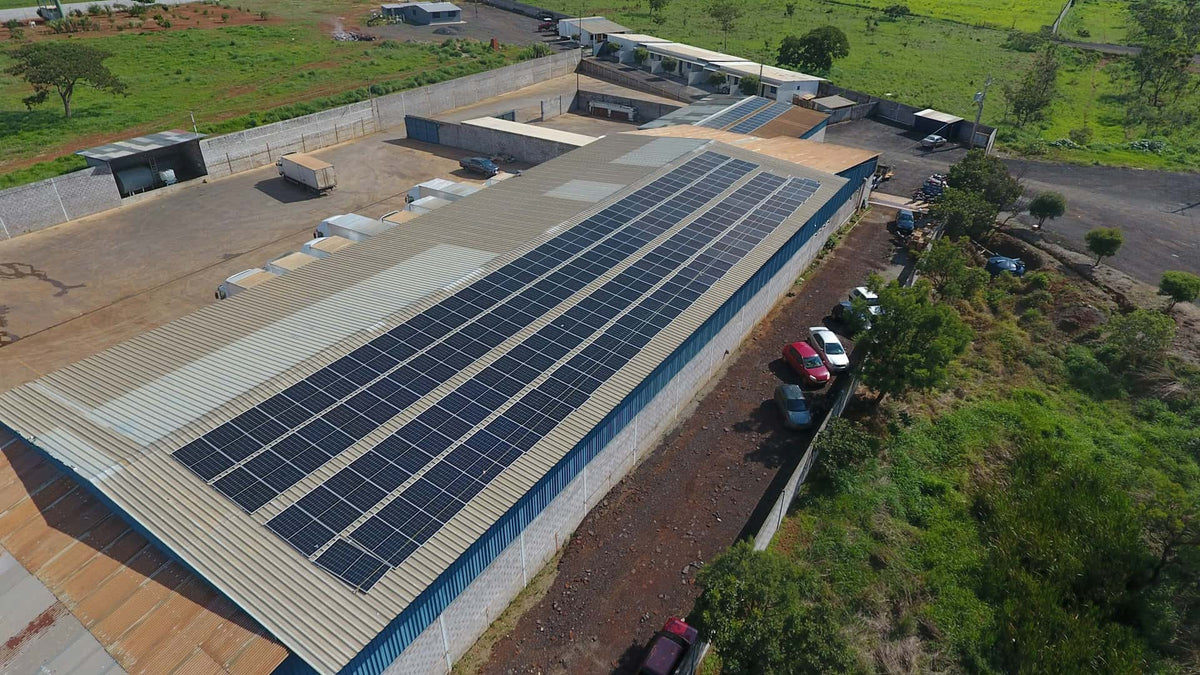
Solar systems for your business
Commercial solar installation is the design, supply, installation, grid connection and ongoing maintenance of solar PV and battery systems for businesses. EagleEyeSolutions handles every stage for companies across Durban and KwaZulu-Natal, from the first look at your electricity bills to the Certificate of Compliance, SSEG registration and years of monitored performance after switch-on.
A factory running three-phase machinery from 6am, an office park that empties at five and a cold store that never switches off all need different systems, even if their roofs look much the same from the air. That's why every commercial solar installation we take on starts with your load profile, not a panel count. We size the system to the power you actually use in daylight, add storage only where your operations or the numbers call for it, and hand you a design, a fixed cost and a payback estimate you can take to your board. As commercial solar installers working across KZN, we also take care of the part most businesses dread: everything between your roof and the grid.
from your bills
right kW, no waste
CoC and SSEG handled
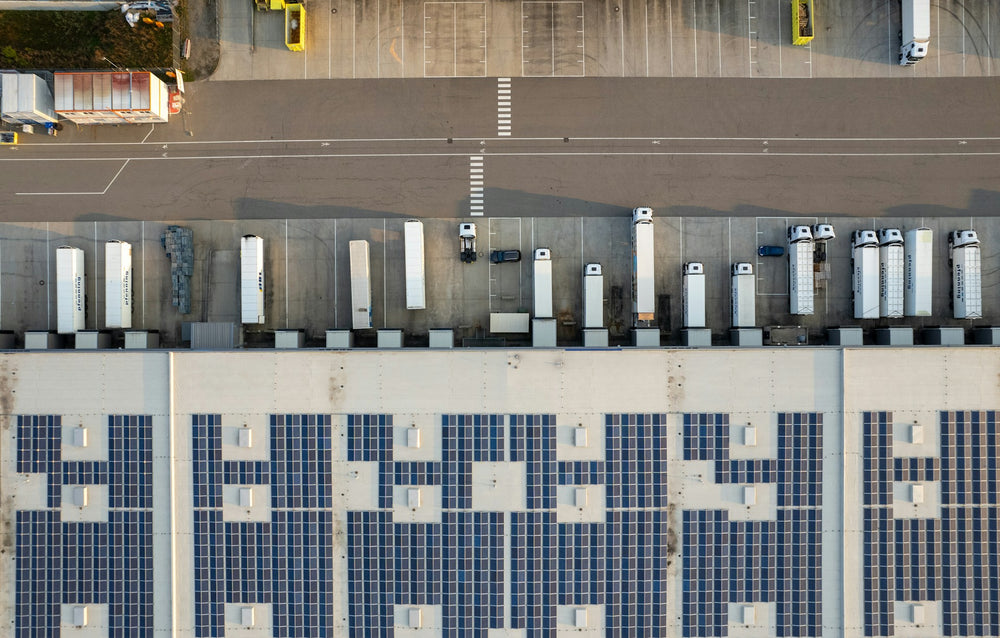
Distribution warehouse - Big roof, most power used between 7am and 5pm. The fastest route to payback.
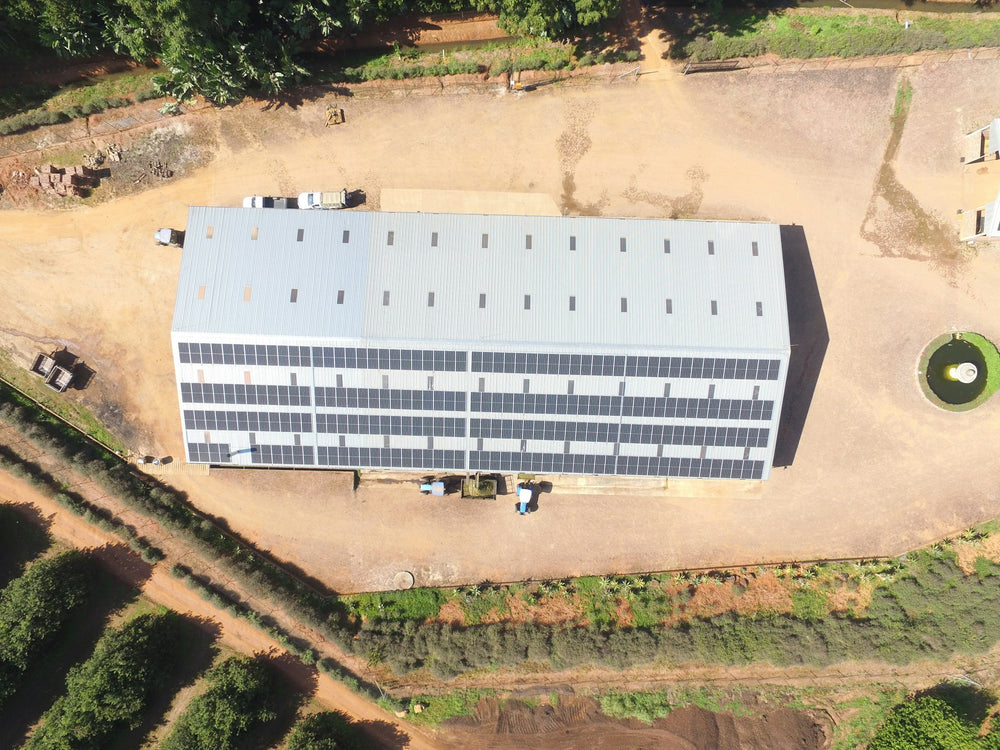
Factory with three-phase machinery - Heavy daytime loads, motor start-up surges and demand charges on the bill.

Multi-tenant office building - Daytime air-con and lighting, plus servers, security and lifts that must stay up.
Every project follows the same four stages, whether it's a 20 kWp retail roof or a warehouse running to several hundred kWp. We start with a site survey and energy audit, working through 12 months of bills or smart meter data, checking roof orientation, shading and structure, and inspecting your main board and point of connection. From there, we model the panel layout, inverter sizing and any storage against your consumption and give you a fixed quote with a payback estimate. Once you sign off, we prepare and submit your SSEG application to Eskom or the municipality, plus NERSA registration where the system size requires it. Installation is phased around your trading hours, and any shutdown for the tie-in is short and agreed with your facilities team in advance. After commissioning, remote monitoring tracks output against the design, and our team keeps the system at its rated performance.
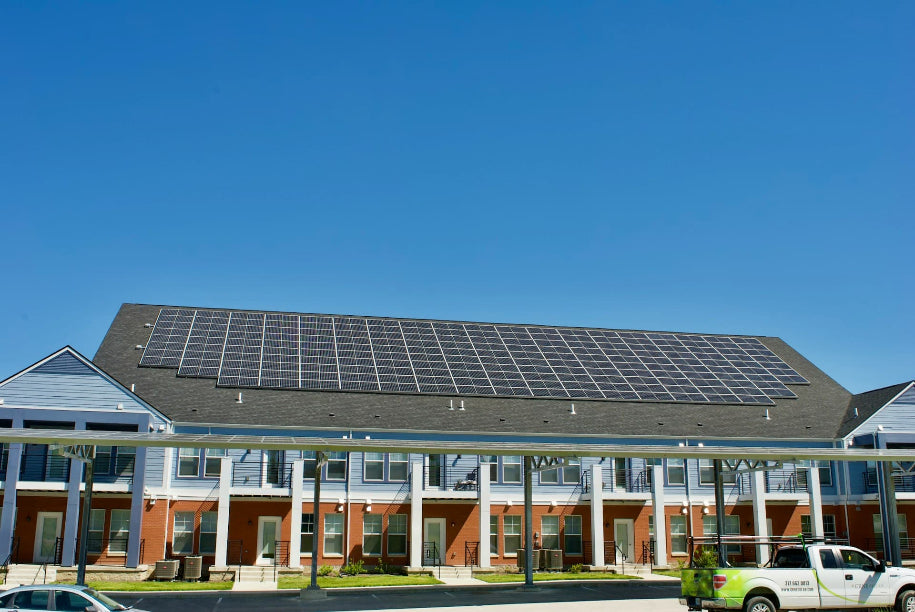
We design four types of solar systems for business: grid-tied, hybrid, off-grid and battery backup, each matched to how and when your site uses power. Before we recommend anything, we look at your consumption data, your tariff and the loads you can't afford to lose. Get the configuration right and you cut daytime energy costs and keep critical loads running through outages, without paying for storage you don't need.
A distribution warehouse running a single day shift, for example, usually gets the best return from a grid-tied system, because most of its demand falls in peak sun hours. Add a cold room or a night shift and battery storage starts to pay its way, carrying the evening load and protecting stock when the grid goes down.
Solar sized to your sector's load profile
Industrial solar installation is a different job from fitting an office roof. Loads are heavy and often continuous, supply is three-phase, roofs are large and demand charges can take a big slice of the bill. As a rule, sites that use most of their power in daylight see the fastest payback, while night-heavy operations usually need storage to make the numbers work.
Heavy daytime machinery suits large grid-tied or hybrid systems. Motor surges and peak demand set inverter and battery size.
Refrigeration runs around the clock. Solar covers the daytime share and storage protects the cold chain when the grid drops.
Big roofs and daytime operating hours make warehouses ideal candidates, often with roof space to spare for future expansion.
Large stores and distribution hubs use most of their power during trading hours, which lines up well with peak solar output.
Demand peaks in daylight during term time and drops over holidays, so we size systems to also plan for the quieter months.
Clinics, hospitals and campuses can't afford downtime, so hybrid systems with battery backup keep essential services running.
Irrigation pumps, dairies and pack-houses often sit on weak rural lines, where hybrid or off-grid systems add real resilience.
Talk to our team about a solar system designed around your site's energy and load profile.
| System | How it works | Battery Storage | Outage Protection | Relative cost |
|---|---|---|---|---|
| Grid-tied | Panels power the building by day; the grid covers the rest | None | No, it shuts down during an outage by design | Lowest |
| Hybrid | Solar plus batteries, still connected to the grid | Yes | Yes, for backed-up circuits | Mid to high |
| Off-grid | Runs on solar, batteries and usually a generator, with no grid connection | Yes, sized for full autonomy | Fully independent | Highest |
| Backup battery | Batteries carry critical loads during outages, charged from solar or the grid | Yes | Critical loads only | Low to mid |
A commercial solar power purchase agreement (PPA) is a contract where a provider installs, owns and maintains a solar system on your property at no upfront cost. You buy the electricity it generates at an agreed rand per kWh rate, typically below what you pay Eskom or your municipality. Learn more about our commercial solar PPA service for businesses in Durban and KwaZulu-Natal.
We review your consumption data, roof space and tariff to size a system that fits your usage.
Installation, monitoring, maintenance and insurance are all included, with no upfront cost.
You only pay for the power the system generates, at an agreed rate below your utility.
Our team is here to help you take the next step.
Commercial solar system costs in South Africa typically range from around R200,000 for smaller business installations to well over R1.5 million for large-scale commercial systems. Pricing depends on the system size (kW), energy requirements, roof type, installation complexity, and whether battery storage is included. Small businesses often install 10kW–20kW systems, while medium to large operations may require 50kW–100kW+ solutions. Because every business has different energy demands, most commercial systems are custom-designed and quoted accordingly.
A Power Purchase Agreement (PPA) is a long-term contract where a solar provider installs, owns, and maintains a solar system on your property, and you only pay for the electricity it produces. The business pays a fixed, pre-agreed tariff per kWh, typically lower than Eskom rates, with no upfront capital required. For large commercial or industrial sites, PPAs can deliver multi-million-rand savings over 10–20 years while shifting all performance and maintenance risk to the provider.
Typical ROI periods for commercial solar systems in South Africa range from under 3 years to around 6 years, depending on system size and energy usage patterns. Small commercial systems up to 30 kWp usually see payback in 4–6 years, medium systems (30–100 kWp) in 3.5–6 years, and large commercial or industrial systems (100 kW+) in 3–5 years.
It depends on your cash position and tax appetite. Outright purchase gives the biggest long-term saving and access to Section 12B, so it suits cash-positive, tax-paying businesses. A PPA suits businesses that want zero capital outlay and no performance risk. We can model both for your site.
EagleEyeSolutions installs commercial solar across KwaZulu-Natal. We work in Durban, Pinetown, Westville, Umhlanga, Ballito and Pietermaritzburg, among other areas.
Solar PV systems are not automatically suitable for every business; their feasibility depends on factors like roof orientation, shading, energy usage, and available space. A professional solar assessment can determine if your site can generate enough electricity to justify installation.
On-site installation for a commercial solar systems usually takes 1–3 weeks. Smaller systems can be completed faster, while larger or more complex setups may take the full three weeks. Factors like roof type, electrical connections, and multiple facilities can affect timing.
Start with your daytime electricity use, not panel count: we size commercial systems from 12 months of bills or smart meter data so the array matches your load profile. Choose Tier 1 panels with a strong performance warranty, as they carry the highest output over 25 years. Higher-wattage panels suit limited roof space, while large warehouse roofs can prioritise cost per kWp. Roof orientation, shading and structure then confirm the final layout.